Retaining Wall Installation in Shippensburg, PA: Choosing a Material the Slope Can Live With
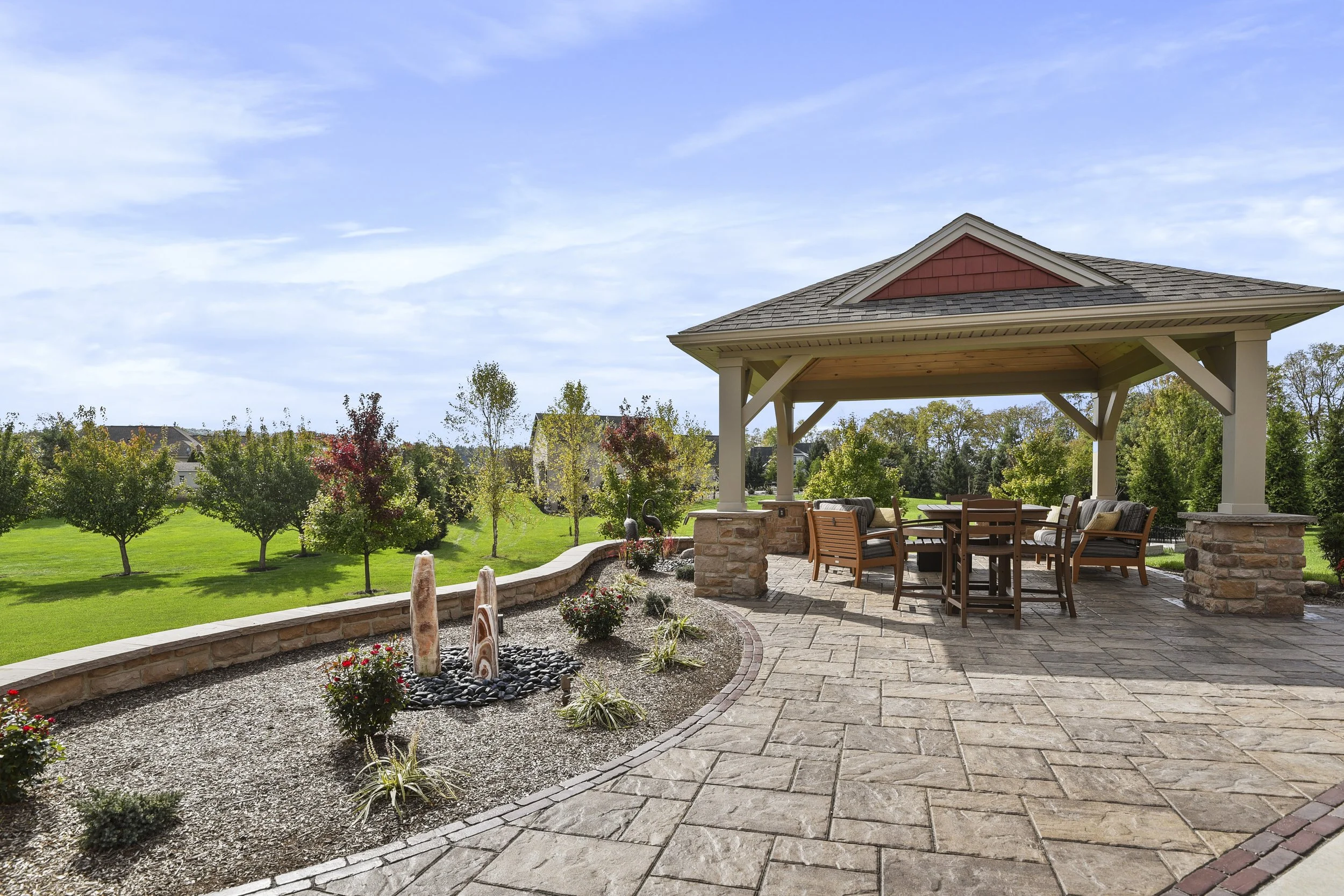
Stone, block, brick or boulder is usually chosen on looks. Retaining wall installation in Shippensburg, PA then follows that choice straight into the base width, the drainage detail and how the finished wall behaves through a Franklin County winter.
Weaver’s Landscape Company started in 1998 as The Lawn Guys and now serves all of Franklin and Cumberland Counties and the Harrisburg metro area as an authorized Unilock contractor.
Nearly three decades of South Central Pennsylvania slopes have shown which materials suit which ground.
Related: Your Backyard Has More Potential Than You Think: Custom Backyard Design in Shippensburg, PA
Which Retaining Wall Material Suits Which Job?
The right retaining wall material depends on what the wall has to hold and how it should look against the house. Our builds include stacked natural stone, boulder walls, traditional brick, concrete block, and decorative walls and columns, and each one answers a different question.
Stacked natural stone suits a property where the wall should look like it grew there. Concrete block gives a precise, repeatable geometry that handles tall structural runs.
Brick ties a wall to a brick house, and boulders handle a rough bank and a big grade change at a scale the others struggle with.
What Does a Boulder Retaining Wall Need That a Block Wall Does Not?
A boulder retaining wall needs more room and clear machine access than a block wall. Boulders are set individually and keyed into each other, so the wall occupies more depth than its face suggests, and the equipment placing them needs a path to the work.
On a tight suburban lot, that is often the deciding factor rather than the look. It is worth raising early, because discovering it after a material has been chosen means choosing again.
Where Does the Water Behind a Retaining Wall Go?
The water behind a well-built retaining wall goes out through a drainage system designed into the wall. With built-in drainage, water is directed away from the house and other structures rather than collecting behind the wall and pushing on it.
Saturated soil is substantially heavier than dry soil, so a wall without drainage spends every wet week carrying a load nobody designed it for. This is the detail that separates a wall standing at twenty years from one leaning at eight.
How Does a Pennsylvania Freeze and Thaw Test a Retaining Wall?
A Pennsylvania winter tests a retaining wall through repeated freeze-thaw cycles rather than a single hard freeze.
South Central Pennsylvania cycles through freezing and thawing across a winter, and each cycle lifts and drops whatever water is held in the backfill.
A wall built on clean, free-draining stone has very little water in it to freeze. A wall backfilled with the soil that came out of the hole has a great deal, and the movement shows up as bulges and opened joints after a few seasons.
What Is a Retaining Wall Cap Actually Doing?
A retaining wall cap sheds water and finishes the line of the wall. Natural stone caps keep rain off the top course and out of the wall, which matters more than the visual tidiness they also provide.
A cap is also where a wall becomes useful. Set at the right height with enough overhang, the top of a wall turns into somewhere to sit. Stone veneer columns at the ends give the run a proper stop rather than letting it trail off into a bed.
Match a Shippensburg Wall to the Ground It Is Holding
The slope, the soil and the load decide most of this before anyone opens a brochure. Our retaining wall work starts with what the ground is doing and lets the material follow from there.
Request a retaining wall installation consultation with Weaver’s Landscape Company.
In Summary
How tall can a wall get before it needs an engineer?
Whether a retaining wall needs an engineer depends on what it holds as much as how tall it is. A modest wall holding nothing but a garden bed behaves very differently from the same wall holding up a drive, a parking area or a structure, and that extra load is what usually triggers a stamped design. Pennsylvania municipalities set their own thresholds, so the question gets asked locally before the design is finished.
Can a natural stone wall be repaired in sections?
A natural stone wall can usually be repaired in sections, which is one of the quiet advantages of stone. A bulged or settled run can be taken down course by course, the base and drainage corrected, and the same stone reset, so a localized failure does not condemn the whole wall. Matching new stone into an older wall is the harder part.
What is the difference between a retaining wall and a seating wall?
A retaining wall holds soil back and is engineered for that load, while a seating wall is freestanding, built to bench height with a wider cap, and carries nothing but people. Weaver’s Landscape Company often builds the two along the same line, which is why they get confused, but only one of them is structural.
About the Author
Burnell Weaver founded Weavers Landscape Company in Shippensburg, PA and has spent nearly three decades designing and building outdoor living spaces across central Pennsylvania. Every article in our Knowledge Center draws on hands-on experience from real residential projects, from patios and plantings to full backyard transformations.